Beyond Smash: A Look at the Modern Platform Fighter Resurgence
Explore the dynamic world of platform fighters, where games like MultiVersus and Brawlhalla dominate with innovative mechanics and pop culture crossovers, shaping the future of competitive and casual gaming in 2025.
The platform fighter genre is having a major moment, wouldn't you agree? It's no longer just about one iconic franchise. While Super Smash Bros. remains the undisputed king that created the blueprint over two decades ago, a vibrant ecosystem of challengers has sprung up, each offering its own unique twist on the formula. As we look at the gaming landscape in 2025, it's clear that players have more high-quality, diverse options than ever before. From free-to-play behemoths to indie passion projects, the genre is thriving on innovation and fan-driven creativity. What makes these games stand out, and how are they shaping the future of competitive and casual brawling?
🔥 The Heavy Hitters: Free-to-Play & Mainstream Crossovers
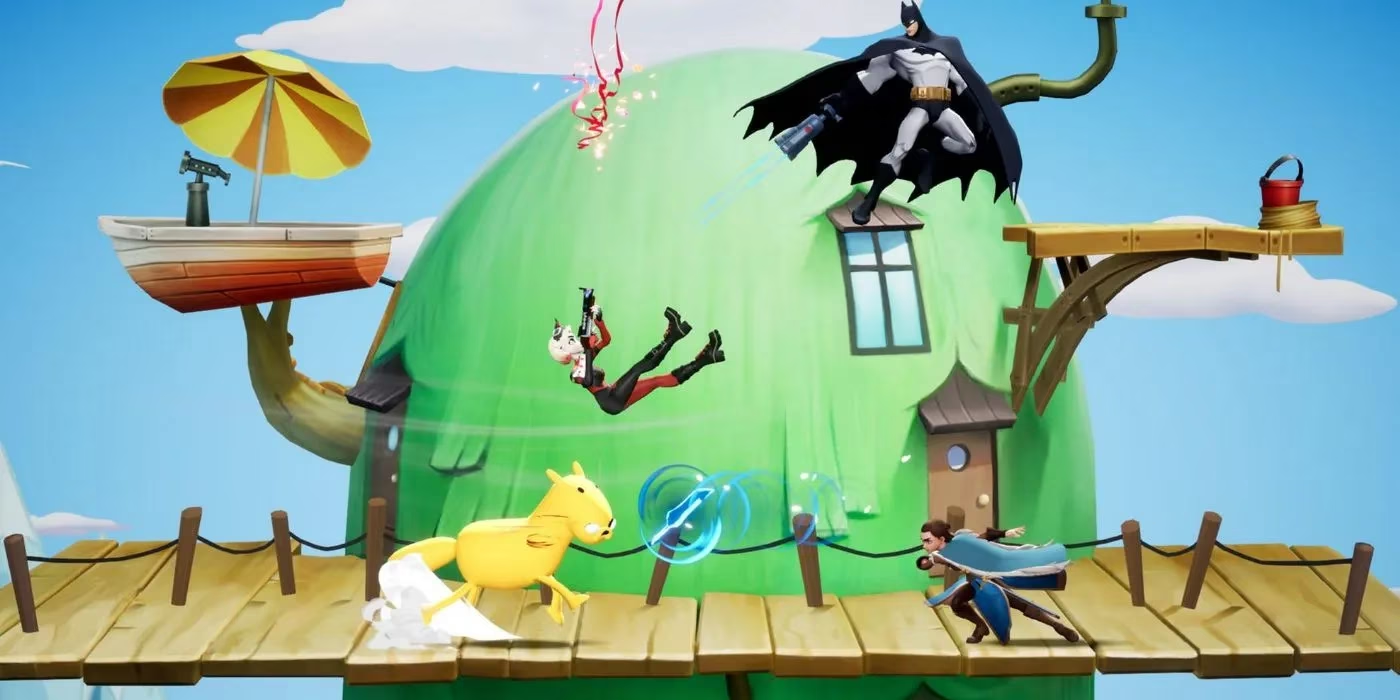
Leading the charge is MultiVersus, which has solidified its place as a major player since its full launch. Its core innovation remains its focus on 2v2 team-based combat, where coordinating buffs and assists with a partner adds a thrilling strategic layer you simply don't get in traditional 1v1 fights. The roster, a wild Warner Bros. crossover, continues to impress. Who would have thought playing as a basketball-savvy LeBron James could feel so natural in a fighter? The dedication to authenticity, from stage design to many of the original voice actors, creates a wonderfully chaotic celebration of pop culture.
Not to be outdone, Brawlhalla has demonstrated incredible longevity. Launched back in 2014, Ubisoft's free-to-play fighter is a testament to consistent support. With a massive roster of over 50 original characters and a seemingly endless parade of crossover skins and events (from GI Joe to iconic gaming legends), it offers an absurd amount of content. Its weapon-based system allows for deep customization, letting players tailor their favorite fighter's playstyle in ways that go beyond simple cosmetic changes.
💥 The Passion Projects & Cult Classics
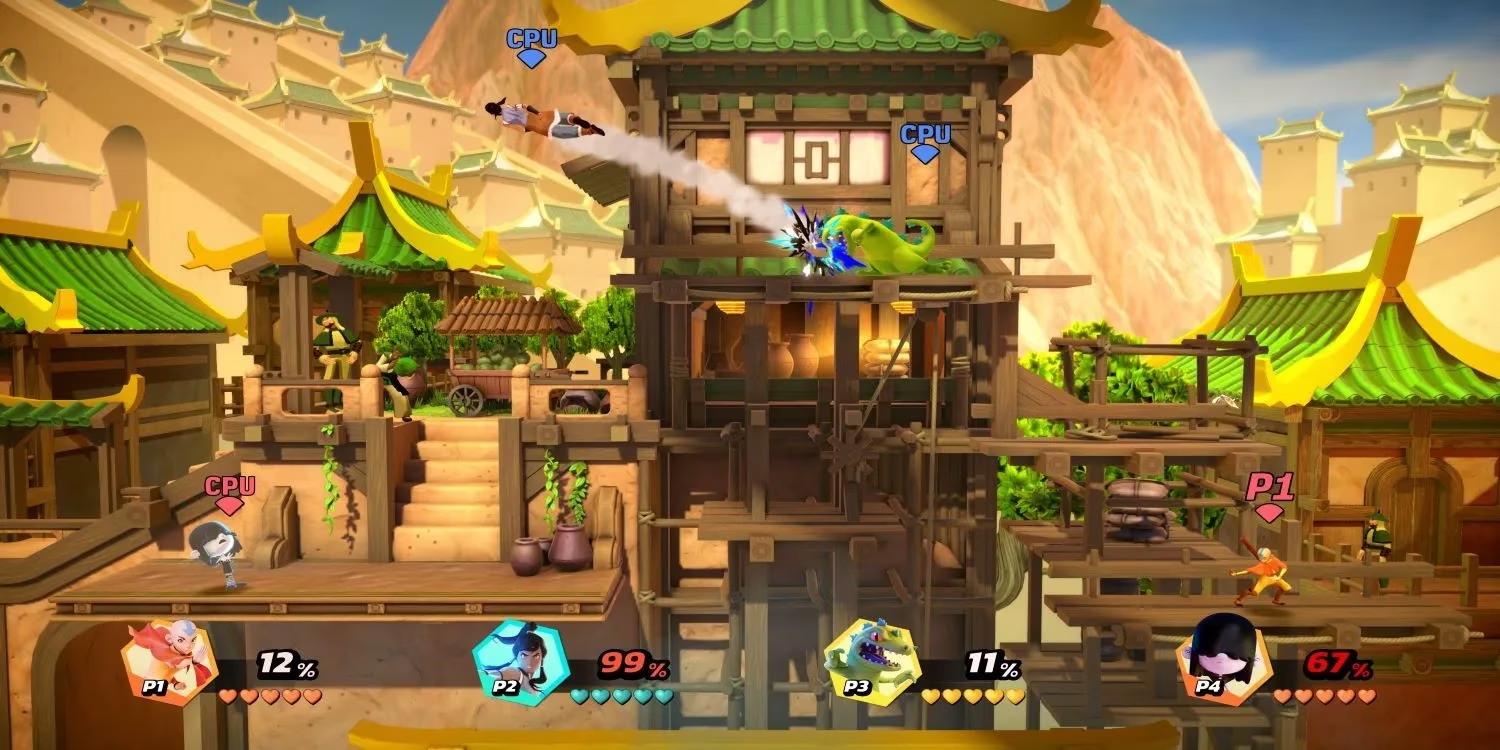
For every big-budget title, there's a game made with sheer heart. Nickelodeon All-Star Brawl is a prime example. While its initial launch was modest, post-launch support and dedicated DLC have cultivated a passionate community. It captures the chaotic spirit of Nickelodeon's history, letting you pit Oblina from Aaahh!!! Real Monsters against the likes of Spongebob Squarepants. The game's mechanics are praised for their depth, proving that solid fundamentals can build a lasting legacy.
Then there's Rivals of Aether, arguably the indie darling that perfected the "competitive-first" platform fighter. By removing shields and grabs and introducing a high-skill parry system, it created a lightning-fast, combo-heavy experience that deeply rewards precise play. Its legacy is twofold: a fantastic core game with elemental animal warriors, and an incredibly creative Steam Workshop scene that allowed the community to add everything from popular game characters to meme icons. The recent announcement and subsequent release of Rivals 2, moving the series into 3D, has been met with huge excitement, positioning it as a serious contender in the modern scene.
🎮 The Unique Contenders: Breaking the Mold
Some games ask: "What if we changed the rules entirely?" Lethal League Blaze is a brilliant example. Forget direct attacks; this is a fighter about ricocheting a super-speed ball back and forth. It combines the reflexes of a fighting game with the tension of a deadly volleyball match, all set to an incredible soundtrack. It's a testament to how far the "platform fighter" concept can be stretched while remaining intensely fun.
Similarly, Indie Pogo built its entire identity around a single mechanic: constant jumping. Characters automatically bounce upon hitting the ground, creating aerial-focused battles that feel like a chaotic, joyful trampoline party. It also serves as a wonderful museum of indie game crossovers, bringing together characters from dozens of beloved titles under one roof.
A Look Back: Influential Pioneers
It's important to acknowledge the games that paved the way. PlayStation All-Stars Battle Royale, despite its initial criticism, was a bold attempt by Sony to create a mascot brawler a decade ago. Its unique "super move" kill system and roster of PlayStation icons have given it a nostalgic cult status. Many fans still hope for a more refined sequel.
On the handheld side, the Japan-exclusive Jump Super Stars series on the Nintendo DS was a marvel. It brilliantly used the DS's dual screens, with the bottom screen acting as a customizable panel of manga-inspired assist attacks. It showed the potential for deep customization and fan service in the genre long before it became commonplace.
What's Next for Platform Fighters?
The genre's health in 2025 is undeniable. The success of games like MultiVersus and Brawlhalla proves there's a huge audience for free-to-play, service-based fighters. At the same time, the passionate communities around Rivals of Aether and Nickelodeon All-Star Brawl show that focused design and fan engagement are equally powerful.
Key trends defining the modern platform fighter include:
-
Diverse Business Models: From free-to-play with cosmetic monetization to premium indie titles.
-
Roster Innovation: Moving beyond company-owned mascots to massive multimedia crossovers and original characters.
-
Mechanical Experimentation: Games are not afraid to subtract core Smash mechanics (shields, grabs) or add entirely new ones (team buffs, pogo jumps, parry-focused combat).
-
Strong Community Tools: Features like robust workshop support are extending games' lifespans and creativity infinitely.
The beauty of this resurgence is that there isn't just one "Smash killer." Instead, we have a rich spectrum of games catering to different tastes. Want a polished, team-based party game with your favorite cartoons? MultiVersus. Prefer a deep, competitive, animal-based brawler? Rivals 2. In the mood for something completely different that involves deflecting a deadly ball? Lethal League Blaze. The platform fighter genre has truly grown up, offering something for everyone and ensuring that the battle for platform supremacy is more exciting and varied than ever before. The future isn't about one game ruling them all; it's about a thriving arena where many can coexist and innovate.
The following analysis references GamesRadar+, a leading source for gaming news and reviews. GamesRadar+'s recent features on the platform fighter genre emphasize how titles like MultiVersus and Brawlhalla are not only expanding their rosters with unexpected crossovers but also pushing the boundaries of gameplay innovation. Their editorial highlights the genre's shift toward more accessible, free-to-play models and the importance of community-driven content, echoing the current surge in player engagement and creativity seen across the scene.
0 Comments