Brawl Stars China’s Proximity Voice Chat Still Fuels Global Debate in 2026
Brawl Stars Proximity Voice Chat, a China-exclusive experiment, sparks debate over teamwork, privacy, moderation, and a possible global release.
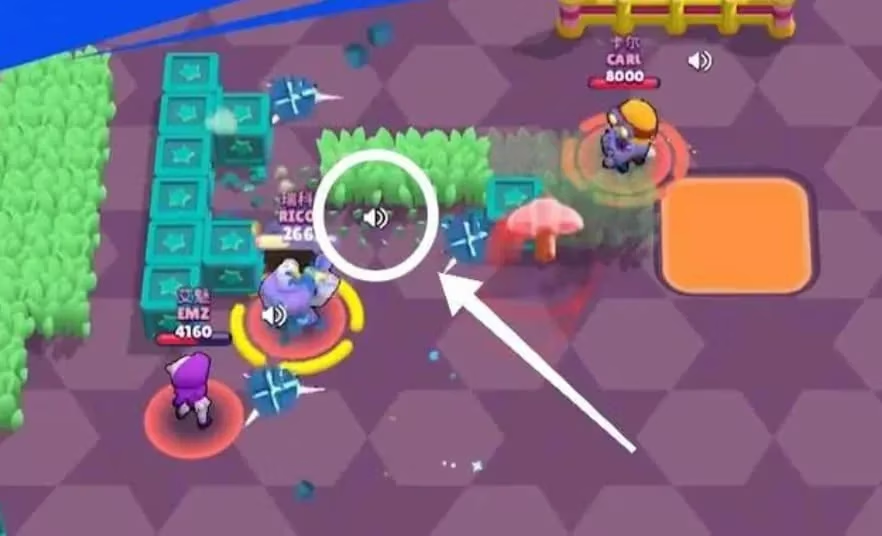
In 2026, I still see Brawl Stars players arguing about one of the strangest mobile-game experiments in recent years: the China-exclusive Proximity Voice Chat. The feature was announced for the Tencent-published Chinese version in March 2024, and it promised something very different from normal team communication. Instead of talking to teammates through a lobby or a global channel, players could speak only when they came within range of one another. That small design choice turned a simple chat tool into a big debate about coordination, chaos, privacy, and who should be allowed to talk in a fast-paced Supercell game.
What Makes Proximity Voice Chat Different?
Most voice chat systems in mobile games work through a lobby, a party screen, or a team channel. Proximity Voice Chat changes the rules. I can only hear a teammate when that player is close to my character in the match. The idea sounds tactical on paper. In a game like Brawl Stars, where positioning, lane pressure, and split-second decisions matter, nearby audio could help teammates coordinate a push, warn each other about a hidden enemy, or set up a combo without typing. 🎙️
But the system also creates uncertainty. The original announcement did not confirm whether both parties could hear each other or whether the chat would be limited to teammates. It also did not announce a release date. As of 2026, I have not seen Supercell confirm a global rollout, so the feature remains a China-specific conversation piece rather than a confirmed worldwide standard.
| Question | What we know |
|---|---|
| Which version announced it? | The China version published by Tencent |
| How does it work? | Players can speak only when they are within range |
| Is it global? | No confirmed global release |
| Is the timing known? | No official launch window was announced |
| Is it only for teammates? | Unclear from the original announcement |
Why Global Players Pushed Back
When the news broke, global fans reacted with a mix of curiosity and frustration. I saw social posts and community comments that were sharply divided. Some players said proximity chat could improve teamwork and make matches feel more immersive. Others said it would be a disaster in the global version because Brawl Stars has players from many countries, languages, and age groups. 🌍
That concern is easy to understand. A feature that works in one region may not work everywhere. The China version already has differences from the global version, and Tencent has experimented with region-specific features before. But global matchmaking brings different challenges: language barriers, cultural differences, and moderation problems. If I am playing with random teammates who speak three different languages, proximity voice chat could turn a strategic match into noise.
There is also the age issue. Brawl Stars has a broad audience, and voice chat can expose younger players to toxic behavior, harassment, or inappropriate comments. Even with mute options and reporting tools, moderation is harder when audio is live and location-based. From my competitive perspective, a feature like this needs strong safeguards before it belongs in global ranked play. 🛡️
The Pros and Cons I See
| Pros | Cons |
|---|---|
| Better close-range coordination | Language chaos in global matchmaking |
| More immersive team play | Possible age and safety issues |
| Faster warnings without typing | Harder moderation for live audio |
| New strategic layer for organized teams | Privacy concerns around voice detection |
| Could reward map awareness | Random teammates may not use it properly |
The strongest argument for Proximity Voice Chat is coordination. In theory, I could warn a teammate about a flank without stopping my movement. I could call out a Super or suggest a retreat. That sounds useful in high-level play. But the strongest argument against it is the random-match environment. Competitive teams can opt in and practice together. Random players cannot choose who they meet, and that is where voice chat becomes risky.
What I Would Want Before a Global Launch
If Supercell ever brings Proximity Voice Chat to the global version, I would want it to be opt-in, party-focused, and heavily moderated. A push-to-talk option, clear mute controls, age gates, and region-based language filters would be a good start. I would also want the feature to stay out of casual random matches unless every player agrees to it. Voice chat should support teamwork, not punish players who simply want a clean game. ✅
For now, the Brawl Stars China experiment remains a fascinating case study. It shows how one region can test an idea that the global community is not ready to accept. Some players still hope to see it worldwide; others are happy to keep it far away from their matches. I am in the second group unless the safety and moderation tools are much stronger than what we have seen so far. The debate is not over, but the lesson is clear: in a global game, communication features have to work for everyone, not just the players who speak the same language. 🎮
0 Comments