Nickelodeon All-Star Brawl: The Rise and Fall of a Smash Clone
Nickelodeon All-Star Brawl's player count has plummeted, turning this once-promising Smash Bros. alternative into a deserted ghost town.
The dream was there: a chaotic, fun-filled brawl starring some of Nickelodeon's most iconic characters. When Nickelodeon All-Star Brawl launched in October 2021, it aimed to be the definitive alternative to Nintendo's juggernaut, Super Smash Bros. Ultimate. Fast forward to 2025, and the scene on Steam is bleak. Recent data paints a picture of a game that's, well, pretty much a ghost town. We're talking peak concurrent player counts in the low double digits, making the prospect of finding an online match feel like searching for a needle in a haystack. How did a game with so much potential end up in this state? Let's break it down.
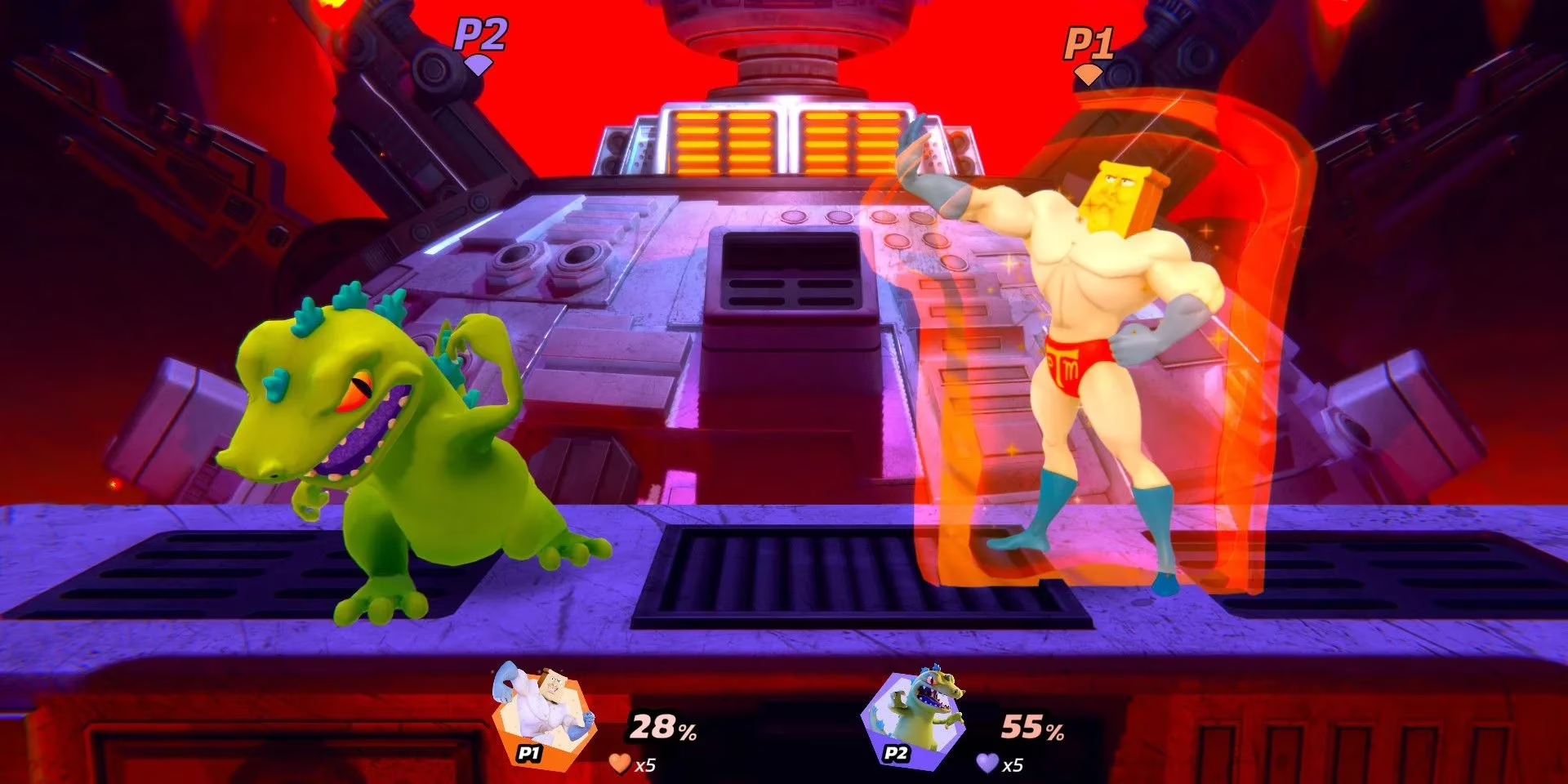
From the get-go, Nickelodeon All-Star Brawl had a lot going for it under the hood. The core fighting mechanics were surprisingly deep and competent, earning praise from the competitive scene. It wasn't just a lazy copy-paste job; the developers put thought into the movesets and the feel of the game. However, that's where the compliments started to hit a wall. The game's presentation was, to put it bluntly, severely lacking. The most glaring omission at launch was the complete absence of voice acting. Imagine Spongebob Squarepants fighting in complete silence—it just felt off, like a party without any music. The stages, while functional, lacked the polish and personality that make Smash Bros. stages feel like living worlds. This lack of soul made the game feel like a competent tech demo rather than a celebration of Nickelodeon's legacy.
Here’s a quick rundown of the core issues that plagued the launch:
-
No Voice Acting: Characters were mute, which was a massive turn-off for fans.
-
Bare-Bones Presentation: Menus and UI felt generic and unfinished.
-
Limited Single-Player Content: There wasn't much to do outside of playing against friends or online.
-
Polish? What Polish?: The game felt rushed, missing the little details that make games feel complete.
The player drop-off was swift and brutal. A month after the initial hype, the active player count began its steep decline. The developers did try to course-correct. In June of 2022, they finally added voice acting—a classic case of "better late than never," but for many, it was a case of "too little, too late." The damage to the game's reputation and player retention had already been done. By the time the voices arrived, the party was already over for most folks.

Let's talk numbers, because they don't lie. According to public tracking data from SteamDB, the situation in 2025 is dire. In the past month, the game's peak concurrent player count on Steam has struggled to break 50. There have been periods where the number of people playing online globally has dipped into the single digits. For a game whose primary appeal is multiplayer brawling, these stats are essentially a death knell for its online community. Finding a match becomes an exercise in patience, and without a critical mass of players, the online portion is, as gamers say, "dead on arrival" for all practical purposes.
The game's post-launch support has been a mixed bag, to say the least. DLC characters were added, which provided a temporary spike in activity whenever a new fighter dropped. But these additions were like putting a band-aid on a broken leg. They didn't address the fundamental issues of presentation, content depth, and the barren online landscape. The one feature that could have been a real game-changer—crossplay—was announced with a 2022 release window. As of 2025, that update has seemingly vanished into the ether with no official update. This lack of communication and follow-through on a promised feature that could unite the fragmented player base across PC and consoles has been a major point of frustration.
It's impossible not to draw comparisons to other games in this niche. The story of Nickelodeon All-Star Brawl feels eerily similar to the fate of PlayStation All-Stars Battle Royale from a decade prior: a promising concept that fizzled out due to a lack of sustained support and polish. More recently, Warner Bros.' MultiVersus entered the arena and, despite its own ups and downs, showed how to do it right from a presentation and fan-service standpoint at launch. It had full voice acting, iconic music, and a free-to-play model that encouraged a large player base. All-Star Brawl now serves as a cautionary tale in this competitive genre.
So, what's the verdict? Nickelodeon All-Star Brawl is a classic case of a game that nailed the hard part (the gameplay mechanics) but completely whiffed on the everything else that makes a game feel alive and worth returning to. It's a lesson that in the party brawler genre, personality and content are just as important as tight controls. In 2025, the game stands as a relic—a what-could-have-been for Nickelodeon fans. For those looking for a chaotic crossover fighter, the servers might technically be on, but finding a match is a long shot. The game's fate seems sealed, a stark reminder that in the fast-paced world of gaming, you only get one chance to make a first impression, and you'd better make it count.
0 Comments