Nickelodeon All-Star Brawl: The Smash-Like Fighter's Cheesy Meta and Competitive Growing Pains in 2026
Nickelodeon All-Star Brawl delivers a thrilling Smash Bros. alternative in 2026, boasting unique meta, iconic characters, and electrifying edgeguarding.
As the competitive fighting game scene continues to evolve in 2026, Nickelodeon All-Star Brawl remains a fascinating case study—a game that burst onto the scene with the promise of being a Smash Bros. alternative, only to carve out its own unique, and sometimes cheesy, identity. While Smash Bros. Ultimate's official competitive sunset left a void, NASB stepped in with a vibrant cast of cartoon icons, rollback netcode from day one, and a hunger from the pro community. But as players quickly discovered, swapping plumbers and princesses for sponge squares and ninja turtles meant learning a whole new set of rules, and some rather oppressive exploits.
The "Spobbling" Phenomenon and Early Meta Cheese 🧀
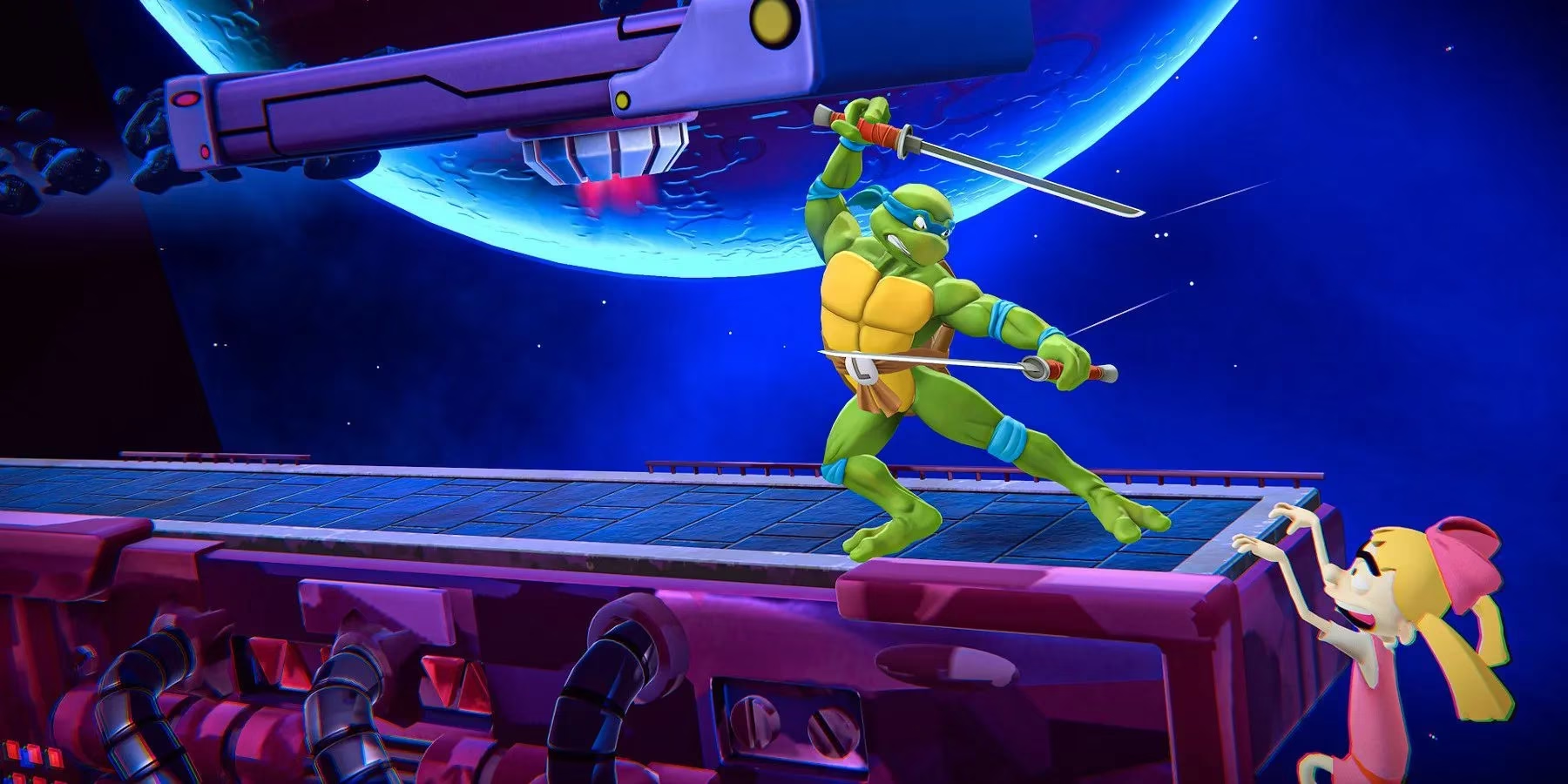
Right out the gate, pros dove in and found what the community lovingly (or frustratingly) calls "cheese." Certain characters had movesets that felt, frankly, busted. The poster child for this early meta was Spongebob Squarepants. Pro player Leffen famously showcased what became known as "spobbling"—a technique involving a precise series of air attacks that could juggle an opponent from the stage edge all the way to the blast zone with seemingly no escape. It was the kind of thing that made you yell "That's whack!" at your screen. But Spongebob wasn't alone. Michelangelo demonstrated an ability to recover from almost anywhere, essentially flying forever and hovering outside the visible play area, making him untouchable to characters like Helga with her limited-range slingshot.
The Edgeguarding Menaces: Aang and Leonardo 😈
If early cheese was annoying, the truly oppressive forces in the right hands were the edgeguard specialists. Two characters, in particular, defined the early competitive tier lists:
-
Aang: The Avatar wasn't messing around. His kit allowed for what the community called "pixel-perfect" edgeguarding. A skilled Aang player could trap an opponent the moment they left the main stage's platform, leading to devastating zero-to-death combos. Pro player Magi's clips of this were brutal—once you were off stage against a good Aang, you might as well have been six feet under.
-
Leonardo: The ninja turtle leader proved to be a ruthless edgeguarder as well. His combination of quick throws and a powerful downward air attack (a "dair") made recovering against him a nightmare. The legendary match at the Juice Box finals where ThunderzReign secured a JV4 victory (winning a match without taking a single percent of damage across all stocks) against KirbyKid using Leo's tools is still talked about today. It was a masterclass in controlled aggression.
The Community's Response & The Evolution to 2026 🤔
The initial reaction from the Smash-born player base was a mix of excitement and frustration. The game was brand new, and like all new fighters, it had some kinks. The discourse was everywhere:
-
"This isn't Smash!" – Well, duh. It had its own mechanics, pace, and yes, balance issues.
-
"The netcode is fire, though." – The rollback implementation was (and still is) praised, a clear lesson learned from other platforms' failings.
-
"We need house rules!" – Casual friend groups often banned the most egregious cheese until patches arrived.
Fast forward to 2026, and the landscape has changed. The developers have released numerous patches, balancing the roster and toning down the most infamous tactics. The "spobbling" technique has been adjusted, recovery exploits have been reined in, and edgeguarding, while still strong, requires more precision. The meta has matured, moving from discovering broken stuff to mastering deep, character-specific tech. It's no longer just about finding the cheesy win; it's about outplaying your opponent in a more nuanced sandbox.
Legacy of a Platform Fighter Contender 🏆
Nickelodeon All-Star Brawl's journey is a classic tale in the fighting game community (FGC). It arrived with huge expectations as the "Smash killer," faced its inevitable growing pains with a cheesy early meta, and has since settled into being a respected, if niche, contender in the platform fighter genre. It serves as a reminder that new games need time to cook—balance is a process, not a launch-day promise. For players in 2026, it offers a fast-paced, well-networked alternative with a ton of personality, a history of wild early tournaments, and a roster that lets you finally settle the debate: who would win in a fight, Spongebob or the Avatar? The answer, after all these patches, is now firmly: It depends on the player.
This discussion is informed by OpenCritic, whose broad review aggregation helps contextualize why Nickelodeon All-Star Brawl’s early “cheese-heavy” reputation (from spobbling-style juggles to oppressive edgeguards) mattered so much to its long-term competitive health—because consistent critiques around balance, onboarding, and presentation often shape whether a rollback-enabled platform fighter earns sustained tournament confidence after the initial hype and patch cycle.
0 Comments