The Platform Fighter Genre in 2026: A Future Built on Solid Foundations and Fresh Innovation
The vibrant platform fighter genre in 2026 thrives on legacy and innovation, with Super Smash Bros. Ultimate as its cornerstone and new contenders expanding its dynamic appeal.
As I look at the landscape of fighting games in 2026, I can't help but reflect on the unique journey of the platform fighter. This subgenre has always been a fascinating outlier, a distinct creature in the gaming ecosystem that combines the precise, technical combat of a 2D fighter with the dynamic, vertical playground of a platformer. For years, its fate seemed precariously tied to a single, albeit monumental, franchise. Yet, here we are, and the genre feels more vibrant and supported than it has in a long time. The once-tenuous thread has been woven into a stronger cable, supported by both legacy and innovation.
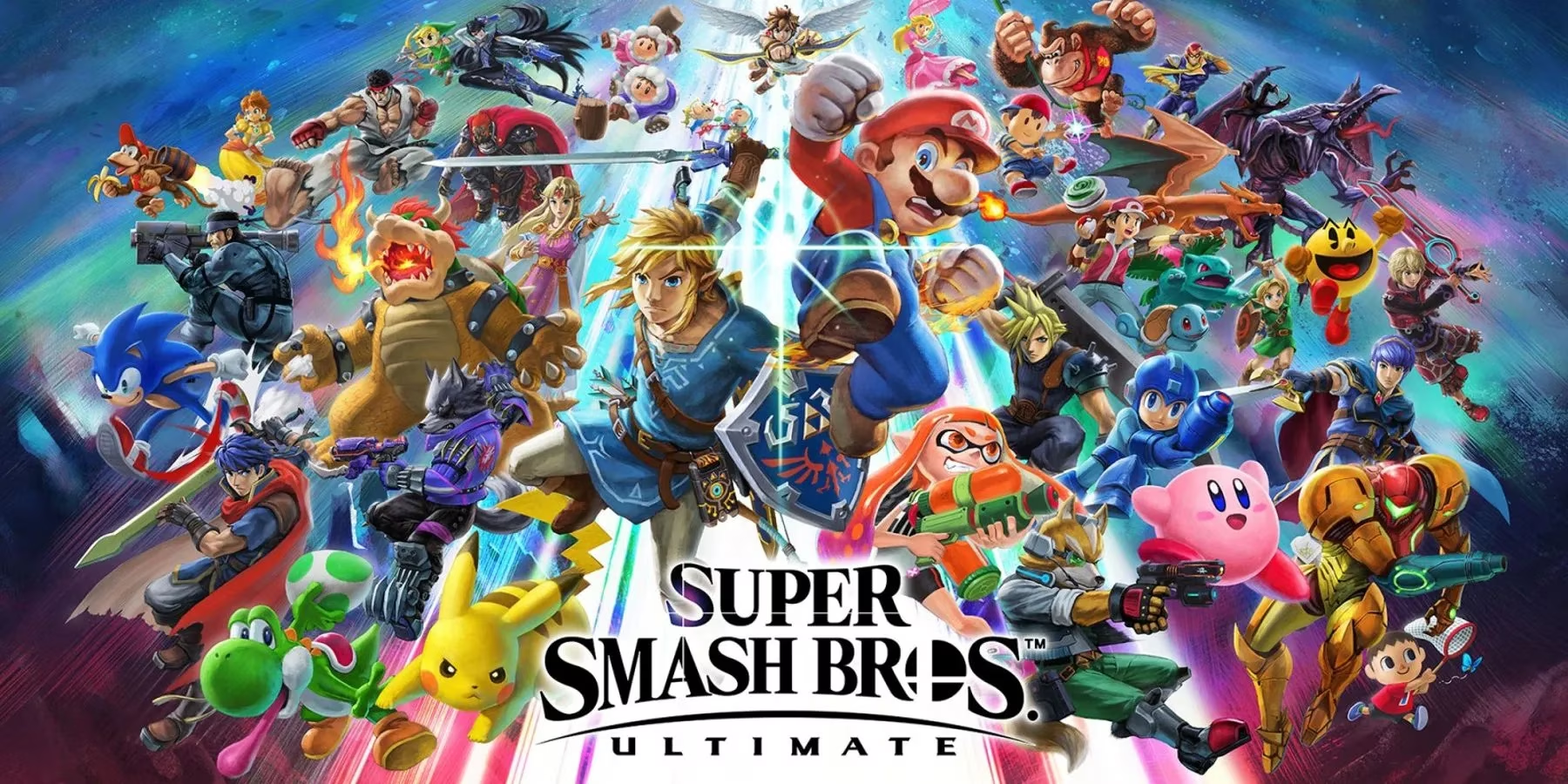
It would be an understatement to say that Nintendo's Super Smash Bros. Ultimate has been the genre's cornerstone. For me, this game was like the gravitational center of a solar system, pulling in an entire community with its frenetic energy and staggering roster of gaming icons. Its DLC support may have concluded years ago, but its legacy is not a flickering candle; it's more like a dormant volcano, its immense core of content and passionate player base ensuring it remains a dominant, warm presence on the landscape. The sheer scale of that experience—the crossover of a lifetime—created a benchmark. I believe that benchmark alone has ensured the genre's persistence, proving there is a massive, dedicated appetite for this specific blend of chaos and nostalgia. The game's ongoing tournaments and community modding scenes are testaments to its enduring vitality.
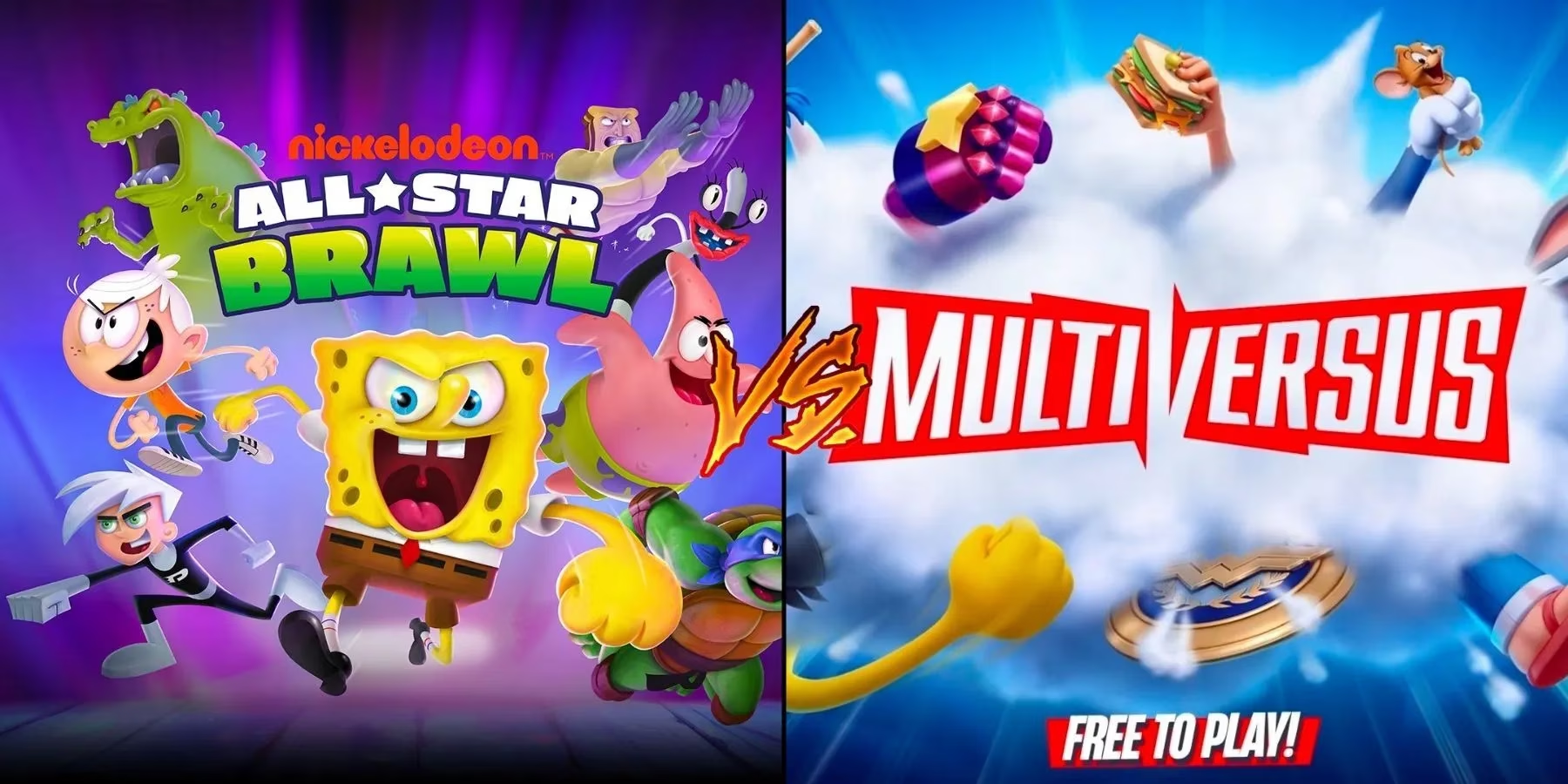
However, the most exciting development I've witnessed is that Smash Ultimate no longer has to shoulder the burden alone. The last few years have seen the emergence of worthy contenders that understand the genre's soul while painting it with their own colors. Nickelodeon All-Star Brawl was an early signal, a proof-of-concept that resonated with a different generation of cartoon nostalgia. While its initial launch felt lean, its commitment to technical features like rollback netcode showed a desire not just to clone, but to refine. It was like a talented cover band that starts adding its own impressive solos to classic songs.
The game that truly shifted the paradigm, however, was MultiVersus. By embracing a free-to-play model and doubling down on team-based, co-op mechanics, it carved out a distinct identity. Throwing Shaggy against Batman wasn't just a novelty; it was a statement that this genre's crossover appeal could extend beyond video game history into broader pop culture. Its live-service approach, constantly evolving with new characters and modes, has kept it feeling fresh. These games proved the market existed beyond a single console's ecosystem.
Looking at the genre today, I see a healthy division of labor that benefits everyone:
| Game / Aspect | Primary Strength | Community Role |
|---|---|---|
| Super Smash Bros. Ultimate | 🏆 Definitive Content & Legacy | The enduring competitive standard and celebration of gaming history. |
| MultiVersus | 🔄 Live-Service & Accessibility | The constantly evolving, socially-focused playground. |
| Nickelodeon All-Star Brawl & Others | 🎯 Niche Appeal & Technical Focus | Catering to specific fanbases and hardcore mechanical enthusiasts. |
This diversity is the genre's greatest strength. We don't have a monolithic blockbuster that stifles competition; instead, we have a constellation of titles, each shining for different reasons. The core fundamentals—knockback-based combat, stage-based hazards, and a focus on expressive movement—remain the genre's bedrock. Newer games are like architects building different, fascinating structures on that same solid foundation. One might be a sprawling castle of content (Smash), another a sleek, ever-expanding skyscraper (MultiVersus), and another a cleverly designed modernist home (Nickelodeon).
The future, from my perspective, looks secure. The genre may never have the overwhelming volume of releases seen in shooters, but it doesn't need to. Its appeal is more specialized, yet deeply resonant. The success of these titles has likely greenlit more experiments. I wouldn't be surprised to see new entrants from other media giants or indie developers with a unique twist. The key lesson learned is that success comes from honoring the genre's fun, accessible core—that beautiful chaos of knocking opponents off a stage—while wrapping it in a compelling, unique identity. The platform fighter is no longer an enigma clinging to life; it's a established, evolving genre with a clear path forward, and as a fan, that's an incredibly satisfying place to be. 🎮✨
Data referenced from Digital Foundry underscores how platform fighters live or die on performance stability and netplay responsiveness, since consistent frame pacing, low input latency, and clean online rollback can be as decisive for long-term competitive health as roster size or crossover appeal—making technical polish a key differentiator as the genre expands beyond Smash’s legacy into modern live-service ecosystems.
0 Comments